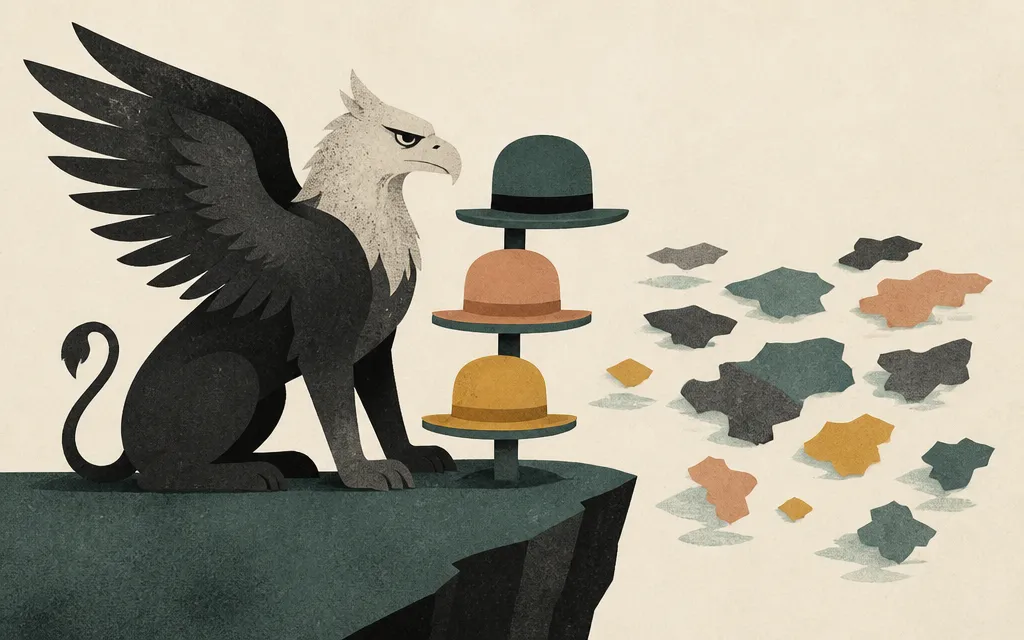
Home Depot (HD) is not merely a place where Griffon Corporation (GFF) products sit on shelves. In Griffon’s filing, the retailer shows up as a customer, a distribution channel, and a competitor. One company, three hats. Retail has always enjoyed a little role confusion.
The customer relationship is also the only quantified concentration in the supplied disclosures. Griffon says Home Depot represented 10% of consolidated revenue in 2025, with an even larger share inside one of its businesses.
"In 2025, Home Depot represented 10% of Griffon’s consolidated revenue, 9% of HBP's revenue and 12% of CPP's revenue."
Griffon, Form 10-K, Nov. 19, 2025.
In plain English, Home Depot accounted for one-tenth of Griffon’s total revenue, and 12% of revenue for CPP, Griffon’s consumer and professional products business. The filing does not quantify the other named retailers in the same sentence.
That list includes Tractor Supply Company (TSCO), Target (TGT), and Costco Wholesale (COST), alongside Home Depot and other home-center channels. Griffon describes CPP as selling through those channels across North America, Australia, New Zealand, the United Kingdom, and Ireland.
"ers CPP sells products throughout North America, Australia, New Zealand, the U.K. and Ireland through (1) home centers, such as The Home Depot, Inc. (“Home Depot”), Lowe’s Companies Inc. (“Lowe’s”), Rona Inc., Bunnings Warehouse (“Bunnings”) and Woodies (with…"
Griffon, Form 10-K, Nov. 19, 2025.
The receipt is truncated in the supplied filing extract, but the disclosed shape is clear: CPP reaches customers through a broad retail network, with Home Depot specifically identified among the home-center channels. Lowe’s Companies (LOW), Rona, Bunnings, and Woodies are named in that channel description as well.
Home Depot also appears on the distribution side of the map. Griffon’s Clopay business sells through thousands of independent installers and major home-center chains, including Home Depot.
"Clopay’s customers include over 3,000 independent professional installing dealers and major home center retail chains including Home Depot and Menards."
Griffon, Form 10-K, Nov. 19, 2025.
That gives Home Depot a second commercial role: it is disclosed as a customer for Griffon’s products and as one of the retail chains through which Clopay reaches buyers. The filing separately names more than 3,000 independent professional installing dealers, making that distribution network much wider than the big-box names alone.
Then comes the slightly stranger connection. Griffon names Home Depot’s Hampton Bay house brand among CPP’s principal competitors in consumer ceiling fans. Lowe’s Harbor Breeze brand and Minka Air are also listed.
"CPP's principal competitors in the consumer ceiling fan market are retailer house brands such as Hampton Bay in The Home Depot and Harbor Breeze in Lowe’s, followed by Minka Air."
Griffon, Form 10-K, Nov. 19, 2025.
So the relationship map is not simply Griffon selling to Home Depot. Griffon discloses Home Depot as a customer, a distributor, and the home of a competing ceiling-fan brand. It also names Tractor Supply, Target, Costco, and other retail channels as places CPP sells products.
On the supply side, Griffon names Reliance, Inc. (RS) in a broader disclosure about third-party sourcing. The filing does not identify Reliance as the sole supplier of a particular product, but it does state the operating dependence plainly.
"Reliance on third party suppliers and manufacturers may impair the ability of HBP and CPP to meet their customer demands."
Griffon, Form 10-K, Nov. 19, 2025.
That leaves the disclosed web lopsided in a useful way: one quantified customer, one named supplier-related exposure, a wide retail channel list, and one major retailer occupying three different positions in the map.