American Eagle shares fell 1.9% to $16.90 at the latest close. The six-month filing underneath that move looks far more cheerful: revenue rose 7.5%, while operating income more than doubled to $211.4 million.
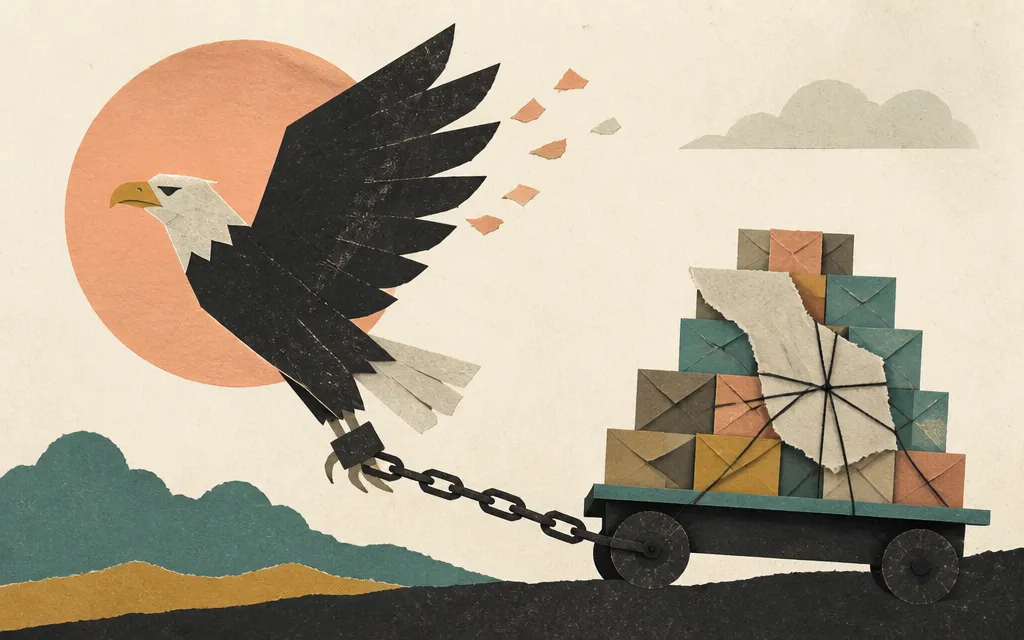
The sharpest change was in reported gross margin. Gross margin jumped from 38.9% to 48.7%, and the company says $121 million of IEEPA tariff refunds, including interest, sat inside the American Eagle segment’s gross-profit increase.
Management describes the result this way:
"The increase in operating income attributable to our American Eagle segment was primarily the result a $75 million increase in gross profit period-over-period, which included $121 million of IEEPA tariff refunds, including interest, and lower buying, occupancy, and warehousing expenses, partially offset by lower merchandise margin, driven by the decline in sales and increased markdowns."
American Eagle, Form 10-Q, September 10, 2026
That sentence contains the filing’s central tension. The refund was larger than the segment’s gross-profit increase, while merchandise margin was lower and sales declined in that segment. Consolidated revenue rose, but the consolidated operating improvement is harder to separate from the trade-policy settlement.
The refund also came with a sizable accounting charge tied to the claim arrangement. American Eagle recorded $52 million of accretion expense in the six months, compared with $1.7 million a year earlier.
"The increase in interest expense, net for the current period was primarily driven by $52 million of accretion expense related to the Participation Agreement for tariff refund claims."
American Eagle, Form 10-Q, September 10, 2026
So the refund lifted operating income, while the related accretion expense reduced the benefit below that line. Net income still rose 72.7%, to $134.1 million, but the filing gives readers a very specific reason to distinguish the new margin level from ordinary retail performance.
Costs moved in the other direction. Six-month selling, general and administrative expense rose 15%, including $49 million of additional advertising and $48 million of higher compensation, with $22 million tied to incentives from the tariff refund.
"The increase in SG&A expenses for the 26 weeks ended was driven by a $49 million increase in planned advertising investments and a $48 million increase in compensation costs, including $22 million of incremental incentive expense attributable to the gain recognized as a result of the tariff refunds received, as well as increased store wage rates associated with new store openings."
American Eagle, Form 10-Q, September 10, 2026
Cash generation improved materially: operating cash flow moved from negative $26.9 million to $116.3 million. But inventory rose 13.9%, faster than the 7.5% revenue increase, leaving a second question beneath the profit surge: how much of the cash improvement reflects earnings, and how much depends on the balance sheet’s timing?
American Eagle’s own annual record supplies context, not a verdict. Operating margin was 4.1% in fiscal 2026, down from 8.0% the year before, making the latest six-month 15.3% margin look unusually wide by comparison. The latest report also says consumer spending was hurt by macroeconomic and inflationary pressure.
The company’s next quarterly report will provide the next comparison for merchandise margin, inventory, and any remaining tariff-refund or incentive effects. The unresolved tension is simple: a much more profitable six months, with a large part of the lift tied to a refund rather than ordinary retail demand.
Source: American Eagle’s Form 10-Q filed September 10, 2026.