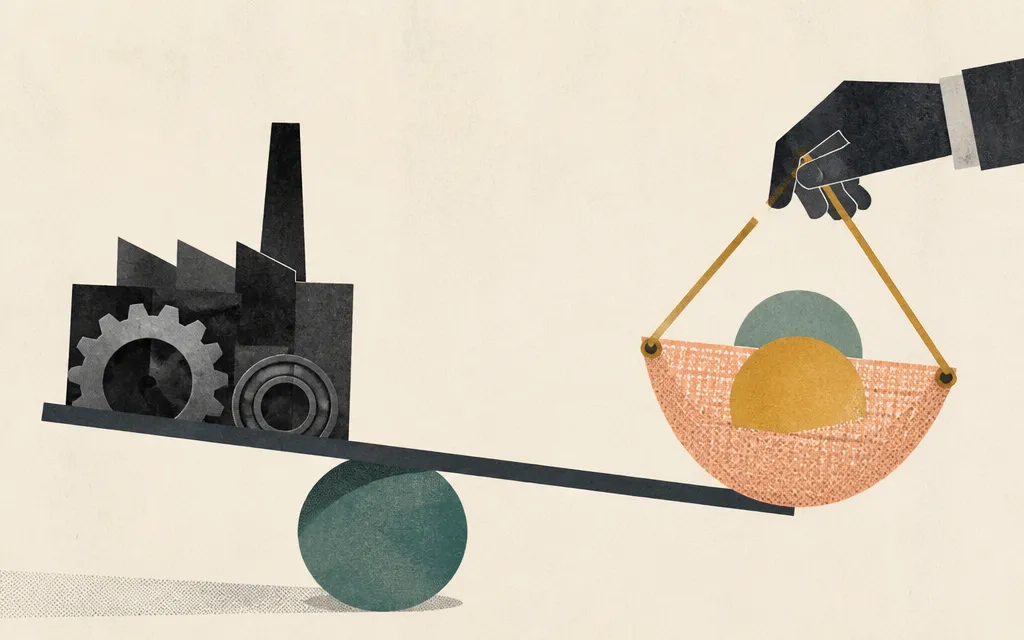
Operating income jumped 28% on 0.3% revenue growth.
That is the bluntest way to read BorgWarner's latest three-month report. Revenue was essentially flat at $3.6 billion for the period ended June 30, 2026, but gross margin rose to 19.8% from 17.6%, lifting operating income to $370 million from $289 million.
The profit improvement is real in the reported numbers. The sales engine is less energetic underneath: BorgWarner says volume, mix, and net new business reduced sales by about $55 million, with estimated market production down roughly 1% and Battery Energy Systems also lower.
"Unfavorable volume, mix and net new business decreased sales by approximately $55 million, primarily due to a decrease of approximately 1% in the weighted average market production as estimated by the Company and a decrease in the Battery Energy Systems reportable segment."
BorgWarner, Form 10-Q, Aug. 5, 2026
That leaves the central tension in plain view. BorgWarner made more money from nearly the same amount of business, and the supplied filing receipts point to cost-side factors rather than stronger demand.
Purchasing savings were a disclosed cost lever for the three months. They reduced cost of sales by about $85 million, according to management, alongside the effects of volume, mix, and net new business.
"The change in cost of sales for the three months ended June 30, 2026 was primarily driven by the following: Purchasing savings and unfavorable volume, mix and net new business, decreased cost of sales by approximately $85 million."
BorgWarner, Form 10-Q, Aug. 5, 2026
The arithmetic shows why earnings moved so much faster than sales. Net income rose 24% to $277 million, while diluted shares fell 5.5% to 206.3 million, giving earnings per share another lift. The company's annual operating margin was 3.7% in 2025, so the latest 10.1% margin is well above that recent full-year level.
There is a balance-sheet detail attached to the improvement. Inventory rose 1.3%, faster than revenue, and inventory intensity increased. Capital spending also rose 21.9% year over year, even as free-cash-flow margin improved by 0.4 percentage points. BorgWarner does not disclose a cause for the inventory change in the supplied report, so the comparison is a condition to track rather than an explanation.
Trade policy provided another offset, though a smaller one than the purchasing savings. Management disclosed $16 million of customer recoveries relating to tariffs, while foreign-currency movements affected cost of sales.
"This was partially offset by the impact of foreign currencies of approximately $105 million due to a strengthening of the Euro and Chinese Renminbi, partially offset by a weakening of the Korean Won, in each case relative to the U.S Dollar, and $16 million of customer recoveries relating to tariffs."
BorgWarner, Form 10-Q, Aug. 5, 2026
At the latest close of $62.96, BorgWarner's trailing P/E was 49.2x, based on the latest annual figures. That puts more weight on how durable this margin recovery is than on whether the company can simply report another flat-sales period with lower costs.
BorgWarner's next 10-Q will provide the direct comparison for inventory, market production, and purchasing savings, including whether the disclosed cost offsets changed in the following three-month period.
Sales are barely moving; margins are doing the heavy lifting.