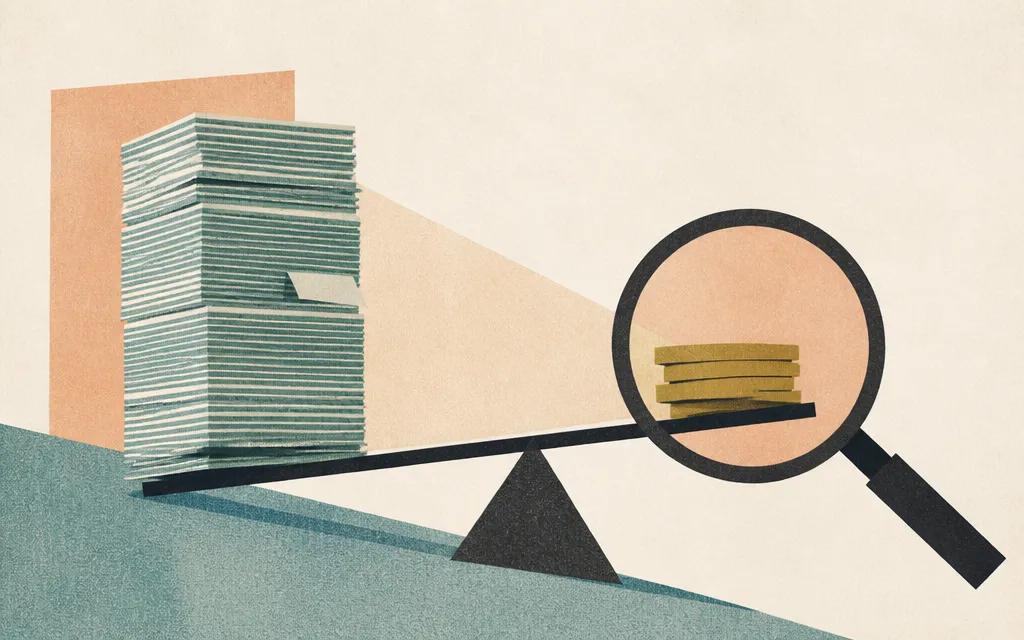
Accounts receivable rose 39.9%, from $5.1 billion to $7.2 billion. For HP, sales are growing, but a larger slice of the money is still sitting with customers instead of in the bank.
It sits alongside a weaker headline earnings figure in the nine-month report. Revenue climbed 12.5% to $15.7 billion, while net income fell 13.4% to $661 million and diluted EPS dropped to $0.71.
The squeeze happened at the gross-profit line. Gross profit increased only 3.3% to $2.9 billion, taking gross margin from 20.5% to 18.8%. HP says the pressure came from commodity costs and a shift toward Personal Systems, partly offset by pricing, favorable currency, and tariff refunds.
"For the nine months ended July 31, 2026, gross margin decreased 0.9 percentage points primarily driven by products gross margin due to higher commodity costs and unfavorable mix shifts towards Personal Systems, partially offset by pricing actions including favorable currency impacts, and IEEPA tariff refunds."
HP Inc., 10-Q, Aug. 27, 2026
The plain-English version is less dramatic and more useful: HP sold substantially more, but each dollar carried less gross profit. Tariff refunds and pricing actions helped, though they did not fully cover the pressure from costs and mix.
Operating income still rose 24.6% to $892 million. That reflects a lower cost base below gross profit, including research and development spending that fell 4.2% to $389 million. Operating margin improved to 5.7%, even as net margin slipped to 4.2%.
Cash supplied a second read. Operating cash flow rose 46.8% to $3.0 billion, while capital spending fell 15.7% to $590 million. Cash ended the period at $4.2 billion, up from $2.9 billion a year earlier, although the balance-sheet build in inventory also deserves a seat at the table: inventory grew 23.5% to $10.3 billion, faster than revenue.
That combination leaves HP with two operating stories at once. Operating income and cash flow both rose, while the business is also carrying more inventory and receivables relative to its sales, while gross margin has moved below the 20.6% reported for fiscal 2025.
Demand is not uniformly doing the heavy lifting. HP disclosed that printer unit volume decreased 6.6%, even as hardware average selling prices rose 3.9%.
"Printer unit volume decreased 6.6% driven by demand softness and competitive pressures, while hardware ASPs increased 3.9%."
HP Inc., 10-Q, Aug. 27, 2026
The higher ASPs accompanied the lower printer volume, but the filing does not turn that into a broader demand rebound. Personal Systems mix was itself part of the gross-margin pressure, so the growth in sales is not arriving with a single clean margin profile.
There is also a financing footnote to the profit comparison. Interest and other expense fell by $80 million over the nine months, helped by lower debt and factoring costs, though HP says the comparison also includes a prior-period litigation gain unrelated to its ongoing operations. Some of the year-over-year net-income movement is therefore accounting history rather than a simple read on the machines business.
At the latest close, HP shares were $30.52, up 3.2% that day and 67.6% over six months. The stock is priced at 11.5 times earnings, with a market cap of $29.1 billion and net debt of $5.1 billion. Those figures put the filing's central question in ordinary language: how much of the sales growth can HP keep after costs, mix, and working capital take their share?
The next quarter's report will put a fresh number beside the current 18.8% gross margin, while the accounts-receivable balance will show whether the $7.2 billion build has started to unwind.
Source: HP Inc.'s Form 10-Q filed Aug. 27, 2026, for the nine months ended July 31, 2026.