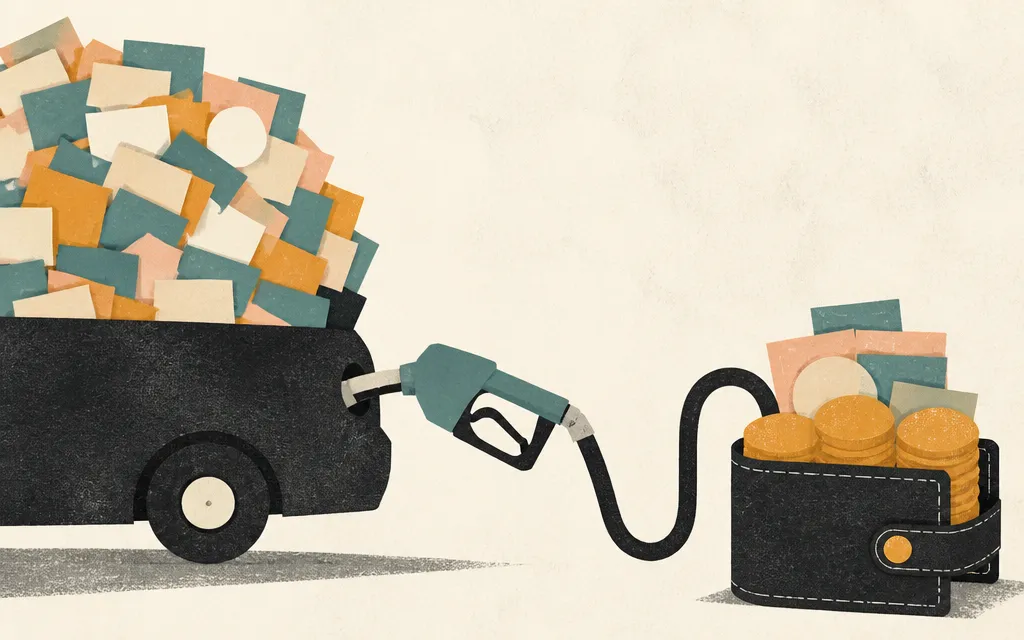
Murphy USA sold fuel at prices 37.4% higher than a year earlier during the three months ended June 30. The number of gallons rose 3.9%. Those fuel figures help explain the three months in which revenue jumped 36.0%, from $5.0 billion to $6.8 billion.
Profit moved faster than sales. Operating income rose 39.1% to $304.9 million, net income climbed 43.6% to $209.1 million, and diluted EPS rose 53.1% to $11.27. The share count fell 6.1%, which gave per-share results an extra lift.
The less dramatic number is the one that frames the whole report: operating margin moved from 4.4% to 4.5%. Murphy USA made substantially more dollars, but the business kept roughly the same thin slice of each sales dollar.
Murphy USA attributed the revenue increase to fuel prices, fuel volumes, and merchandise, with costs running in the other direction. The company said in its 10-Q:
"The increase was primarily due to higher total fuel contribution, higher fuel sales volumes and higher overall merchandise contributions, which were partially offset by higher payment fees, increased store operating expenses, higher income tax expense, increased SG&A expenses and greater depreciation and amortization."
Murphy USA, 10-Q filed Aug. 6, 2026.
That list puts the trade-off in plain English. Fuel supplied the scale, while payment fees, store costs, corporate expenses, and depreciation offset part of the increase.
Merchandise was steadier than fuel. Murphy USA disclosed:
"Total merchandise contribution in Q2 2026 improved 4.0% compared to Q2 2025, primarily due to favorable sales mix and unit growth, combined with increased store count compared to the prior year period."
Murphy USA, 10-Q filed Aug. 6, 2026.
Merchandise contribution grew, but at a fraction of the pace of total revenue. The filing also says depreciation and amortization increased 9.4%, tied primarily to more Murphy-branded stores with larger formats. Expansion is showing up as both a sales contributor and a cost line.
Cash gives the filing another dimension. Cash rose from $54.1 million to $175.4 million, while capital-spending intensity declined and free-cash-flow margin improved by 1.1 percentage points. Inventory rose just 5.0%, but accounts receivable increased 28.0%, a working-capital change.
That matters against the company's recent history. Annual revenue fell in each of 2023, 2024, and 2025, reaching $19.4B in 2025, while operating margin settled at 3.7%. The latest three months therefore show a sharp rebound in reported sales and earnings, but the fuel-price contribution makes the breadth of the rebound harder to read from the consolidated totals alone.
Murphy USA's next quarterly report will add the factual comparison that is missing here: whether fuel prices, fuel volumes, and merchandise contribution are moving in the same direction in the following period. For now, the balance sheet says more cash, the income statement says more profit, and the margin says the extra fuel dollars came with company.
More fuel dollars, only slightly more margin: Murphy USA's latest 10-Q contains both facts.