Operating cash flow rose 108.6%.
That is the oddest number in Nucor’s latest filing, and the first reading is straightforward: the steelmaker generated $2.3 billion in cash from operations during the six months ended July 4, versus $1.1 billion in the comparable period. Revenue rose 23.0% to $10.4 billion, while net income nearly doubled to $1.2 billion.
The stronger cash generation was not just an income-statement mirage. Capital spending fell 32.0% to $1.2 billion, cash increased 27.3% to $2.5 billion, and diluted shares declined 1.0%. Nucor is converting a much larger profit pool into cash while spending less on its projects than it did a year earlier.
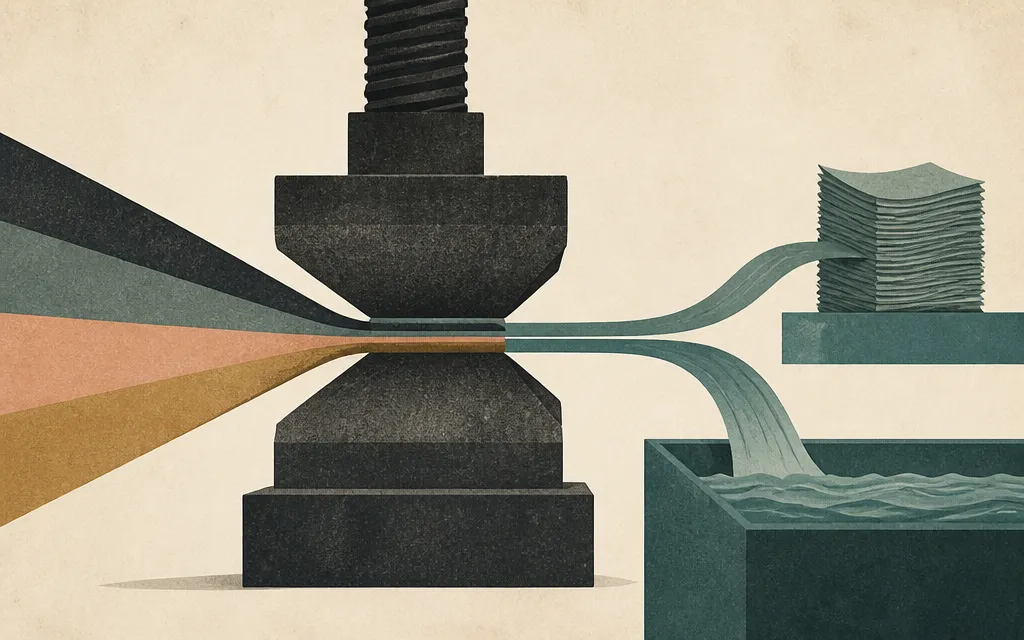
Then the steel-products segment supplies the complication. Its gross margin decreased during the six-month period, even as volumes and average selling prices increased.
"Gross margins in the steel products segment decreased in the first six months of 2026 as compared to the first six months of 2025, primarily due to increased steel input costs which outpaced the previously mentioned increases in volumes and average selling prices."
Nucor, Form 10-Q, Aug. 12, 2026
In plain English, Nucor sold more steel and got modestly better prices, but the cost of making that steel rose faster. Consolidated net margin still expanded from 7.1% to 11.1%, so the pressure has not erased the period’s profit improvement. It does leave the source of that improvement important.
The raw-materials segment also improved. Nucor said earnings there increased in the second quarter because of higher prices, more shipments, and better profitability at its direct reduced iron facilities.
"Earnings in the raw materials segment increased in the second quarter of 2026 as compared to the second quarter of 2025 primarily due to increased average selling prices and shipments, and the improved profitability of our direct reduced iron facilities."
Nucor, Form 10-Q, Aug. 12, 2026
That gives the filing a two-speed operating picture: the core steel-products line faced margin compression from inputs, while raw materials benefited from prices, shipments, and DRI economics. The filing does not say whether the steel-products cost pressure will persist.
Working capital adds another question without answering it. Accounts receivable rose 19.4% to $4.0 billion, nearly twice the 10.2% increase in inventory to $6.0 billion. The balance-sheet growth did not prevent operating cash flow from surging, but the company does not disclose why receivables expanded faster than sales.
Nucor’s shares closed at $271.95 on Aug. 11, down 1.0% that day, after rising 95.7% over the prior 12 months. At 36.0 times earnings, the market context highlights the filing’s operating split: the latest results show stronger cash and profits, while one segment still depends on the relationship between selling prices and steel input costs.
Nucor’s next quarterly report will have to answer the question this six-month filing leaves open: did steel-products gross margins recover, or did raw-materials strength remain the clearer engine of earnings?
Nucor’s Aug. 12 Form 10-Q reports higher six-month earnings and cash flow alongside lower steel-products gross margins caused by higher steel input costs.