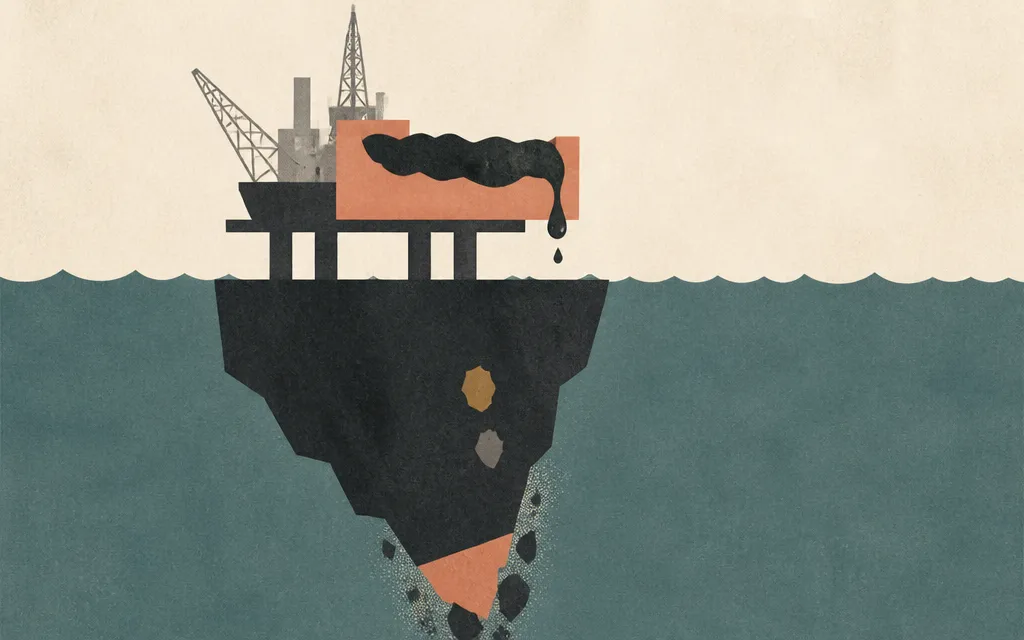
Sable Offshore started selling oil in March. Six months later, the company has $137.1 million of revenue on the books, a real operating business where last year's comparable period had none.
The less comfortable detail is what it took to get there. Cash fell from $247.1 million to $21.6 million, while operating cash outflow reached $72.8 million. Capital spending was lower at $52.6 million, but the business still consumed cash as revenue arrived.
That makes this filing less a simple launch story than a financing story with oil sales attached. Operating income improved from a $128.9 million loss to a $66.9 million loss, and the net loss narrowed from $128.1 million to $64.2 million. The operating line is moving in the right direction, but the balance sheet has much less room around it.
Management points to several costs tied to the start-up phase. The filing says:
"The increase was also attributable to $18.5 million of start-up related demurrage charges and $12.0 million of operator rights expenditures which were recognized for the three months ended June 30, 2026."
10-Q 2026-08-10
Those are not ordinary mature-business expenses, at least by description. They are costs attached to getting the operation running, alongside negative operating cash flow during the period.
Debt added another layer. The company disclosed a $22.1 million increase in interest expense, primarily tied to amortizing additional debt issuance costs from the Third Amendment. It also reported lower interest income because the average cash balance had fallen.
"This increase was partially offset by $1.8 million decrease in other income, reflecting lower interest income due to a reduced average cash balance during the period, and a $22.1 million increase in interest expense, primarily attributable to the amortization of additional debt issuance costs recognized in connection with the Third Amendment."
10-Q 2026-08-10
The arithmetic is doing two jobs here. The lower cash balance reduces investment income, while the amended debt structure raises reported interest expense. Neither is a new barrel of oil cost, but both make the path from revenue to cash harder to read.
The loss itself also contains sizable non-cash items. SOC listed $69.1 million of non-cash interest expense, $36.0 million of depletion, depreciation, amortization and accretion, and $30.4 million of share-based compensation, partly offset by a $27.9 million decrease in warrant fair value. Those marks affect reported earnings, not cash leaving the bank account. The cash balance still fell by $225.5 million.
Share count provides another piece of the funding picture. Diluted shares rose to 153.5 million from 91.2 million, a 68.2% increase, while stock compensation climbed to $30.4 million from $16.5 million. The filing does not reduce that to a single explanation, but the ownership base is plainly larger as the project moves into sales.
Exxon Mobil is a recurring financing connection disclosed in SOC's filings. The latest 10-Q says the companies amended the existing senior secured term loan on June 22, extending its maturity to the earlier of July 24, 2026, or acceleration after an event of default. That does not answer the company's current liquidity question, but it puts a named lender next to the debt-cost disclosure.
SOC's next quarterly report will add the missing comparison: whether cash, operating outflow, and interest expense continued moving together after the initial oil-sales ramp. For now, Sable has started selling oil, and the six-month cash bill is still arriving first.
Revenue has begun; the cash drain has not yet retired.