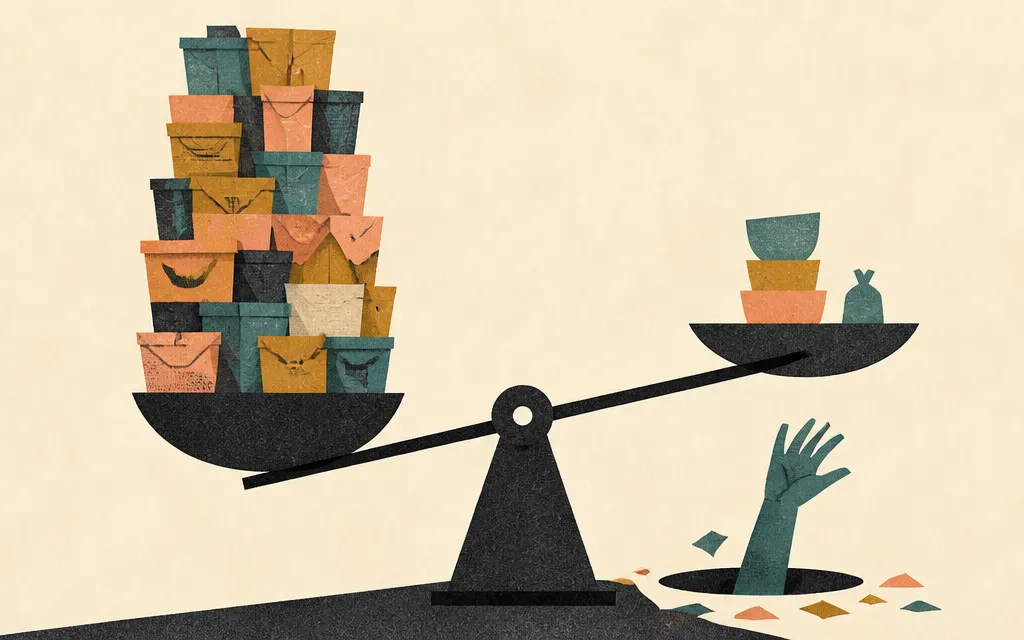
Inventory rose 27.5%. Yum China’s revenue rose 12.6%.
That is the oddest number in the latest filing, and it complicates the three-month comparison. Sales reached $3.1 billion, operating income rose 14.5% to $348 million, and net income increased 13.5% to $244 million.
The per-share version looks better still. Diluted shares fell 6.7%, from 374 million to 349 million, helping diluted EPS rise 20.7% to $0.70. The business grew, while the lower diluted share count meant each remaining share represented a larger slice of it.
The balance sheet presents a more mixed picture. Cash fell 18.1% to $485 million, while accounts receivable rose 22.3% to $115 million. Inventory and receivables both grew faster than revenue. Yum China also generated improved free-cash-flow conversion, with free-cash-flow margin up 0.5 percentage points, so the cash movement is not a simple profit-to-cash failure. The company’s disclosed explanation for the lower cash balance centers on shareholder returns and short-term borrowing.
Management tied the operating-income increase to sales, leaner operations, commodity prices, lower closures and impairment, and lower G&A expenses. Delivery costs and value-for-money offerings pulled the other way.
"The increase in Operating profit for the quarter ended June 30, 2026 was primarily driven by the increase in Total revenues, efficiency improvement from streamlined operations and favorable commodity prices, partially offset by increased delivery cost associated with higher delivery sales mix in the current period and value-for-money offerings."
10-Q 2026-08-10
That helps explain why profit grew faster than revenue, but only narrowly at the margin. Operating margin moved from 10.9% to 11.1%, a gain of 0.2 percentage points. The improvement came from several small levers rather than a dramatic expansion in what Yum China keeps from each sales dollar.
The company also said franchisee revenue increased mainly because system sales rose, driven by faster franchise-store openings. That points to more restaurant capacity as one engine of growth, alongside company sales and delivery. It also leaves delivery economics in the frame: more delivery sales bring revenue, but the filing says they bring higher rider costs too.
Cash was reduced by capital allocation, according to the company’s explanation:
"The increase was primarily driven by the increase of share repurchases and cash dividends paid on common stock, partially offset by the increase in the proceeds from short-term borrowings."
10-Q 2026-08-10
The result is a filing with two simultaneous readings. Yum China produced more profit, saw diluted shares fall with EPS rising materially, and improved free-cash-flow margin. It also ended the period with less cash and more capital tied up in inventory and receivables than the revenue increase alone would suggest.
At the latest close, shares were $47.73, down 0.9% on August 7. The current valuation was 19.1 times earnings, with an 8.3% cash-flow yield. Those figures describe the price investors were assigning to the business, not a resolution of the operating tension.
Yum China’s next quarterly report will provide the factual comparison that matters here: whether cash, inventory, and accounts receivable continue moving faster than revenue after this period’s buybacks, dividends, and restaurant expansion.
Yum China’s latest 10-Q shows faster sales and profit growth alongside faster inventory and receivables growth.